2025 · Ford
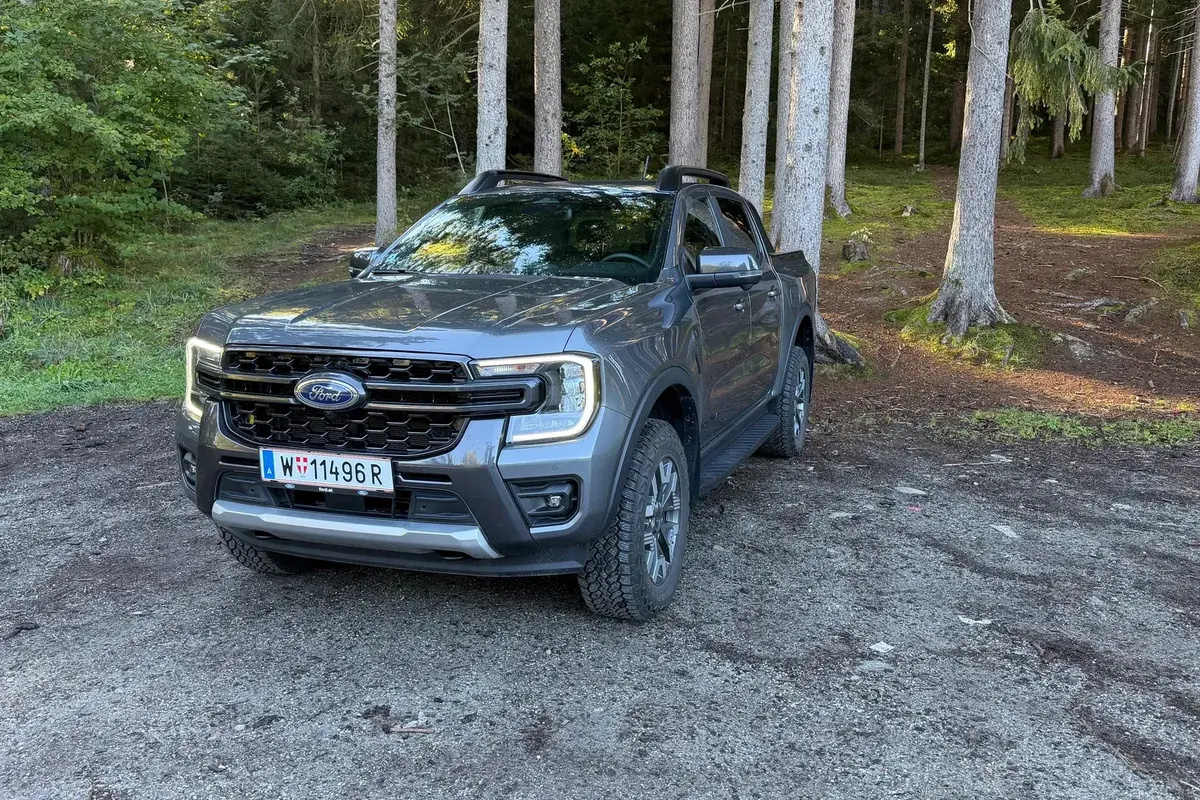
Ranger 2.3 PHEV Wildtrak
From €68,524
Technical data
- Engine
- 2.3-litre EcoBoost four-cylinder
- Power
- 281 hp
- Torque
- 697 Nm
- Transmission
- Automatic
- Drivetrain
- Four-wheel drive
- 0–100 km/h
- 9,2 s
- Top speed
- 180 km/h
- Consumption
- 3.1 l/100 km
drivereport SCORE
Our objective five-pillar rating system
Overall rating
Driving
25% weighting
7.8
out of 10
Everyday use
25% weighting
8.5
out of 10
Technology
20% weighting
8.0
out of 10
Value
20% weighting
7.9
out of 10
Character
10% weighting
8.0
out of 10
The drivereport SCORE is based on our objective five-pillar system. Learn more about the drivereport SCORE.
Pros
- Robust build quality with the premium approach of the Wildtrak trim
- Excellent off-road ability
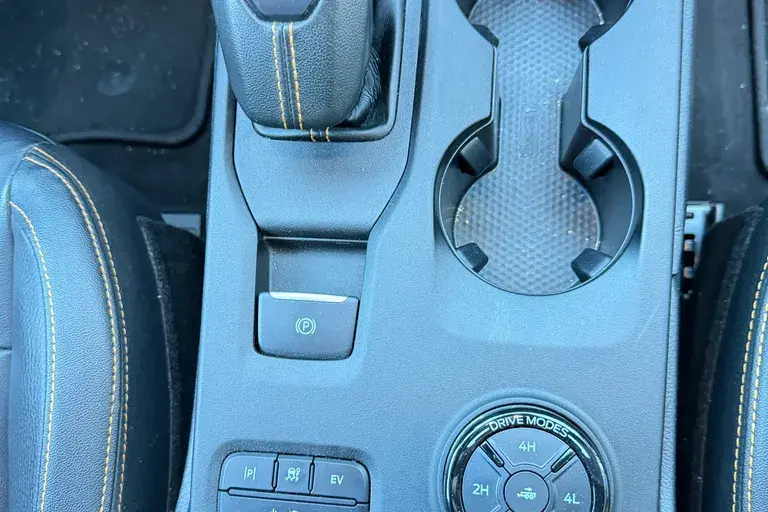
- Many adjustable settings: transmission, four-wheel drive, drive modes, differential lock
Cons
- Limited electric range of 42 km
- No DC fast charging, AC only
Introduction
In Austria, the Ranger is a pick-up everyone knows, from the construction yard to the alpine hut: a workhorse that has grown into a lifestyle vehicle in recent years. With the plug-in hybrid, Ford wants to combine both worlds. It offers the off-road ability and towing power of a classic pick-up, plus an electric motor meant to improve fuel economy and refinement. Our test car, the Wildtrak PHEV in Carbonized Grey, starts at €68,524. With optional extras such as Technology Package 46, an adjustable sports bar and metallic paint, it comes to €76,383. That is a lot of money for a pick-up. The question is what you get for it.
Design and Build Quality
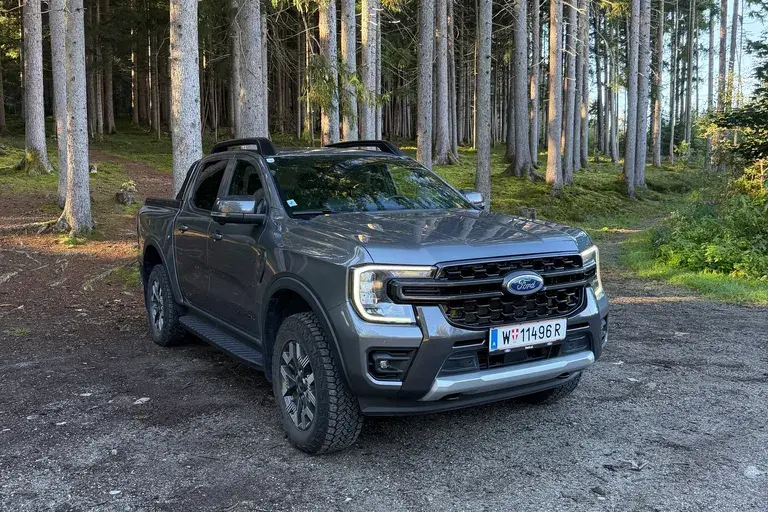
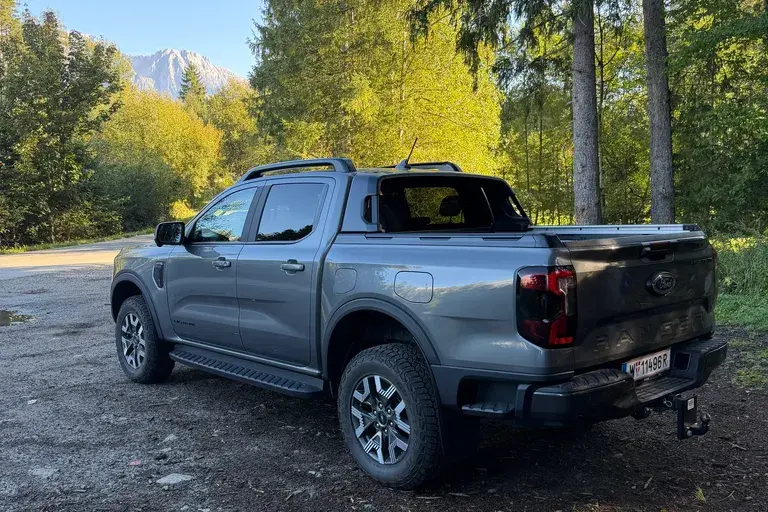
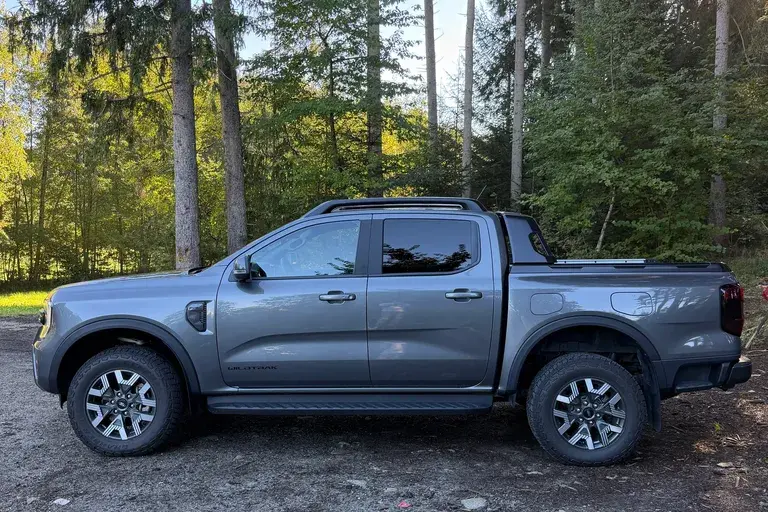
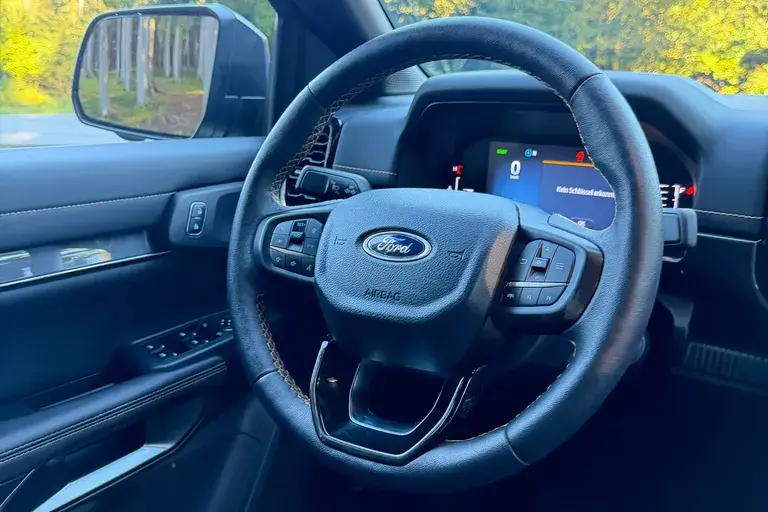
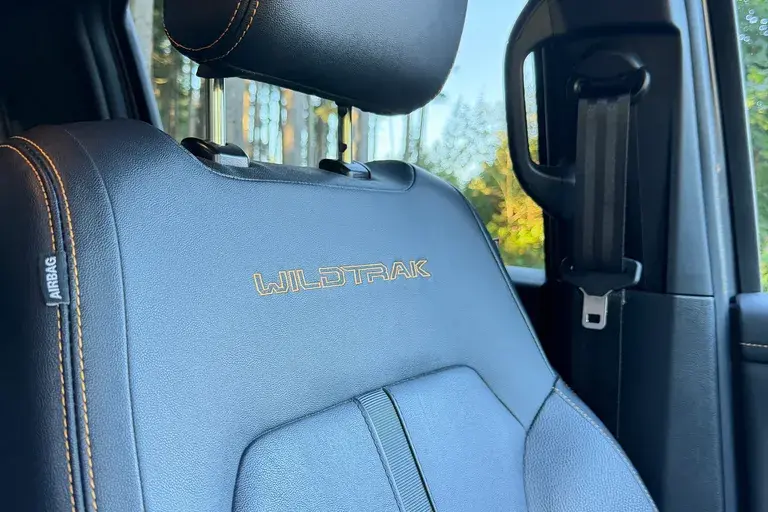
The Ranger Wildtrak has a broad, confident presence. In Carbonized Grey it looks understated but powerful, and the adjustable sports bar underlines the character of a pick-up that isn't only there to work. The build quality is robust, exactly what you expect from a vehicle meant to cope away from the tarmac as well. At the same time, you can feel the premium approach of the Wildtrak trim. The interior stands clearly apart from a pure work tool without giving up durability. The wax-based underbody protection fitted to the test car fits that picture and points to longevity under hard use.
Powertrain and Driving Dynamics
Under the bonnet is a 2.3-litre EcoBoost four-cylinder turbo petrol engine with 138 kW, supported by a 75 kW electric motor. Together they deliver a system output of 281 hp and 697 Nm of torque. Power delivery is one of the vehicle's great strengths. Petrol engine, electric motor and 10-speed automatic work together smoothly, torque is available instantly, and propulsion feels assured, whether overtaking or towing a trailer. 9.2 seconds from 0 to 100 km/h is perfectly adequate for a pick-up of this size and a weight of more than 2.5 tonnes. What matters more is the feel behind the number: the Ranger drives calmly and powerfully, never strained.
Interior and Off-Road Capability
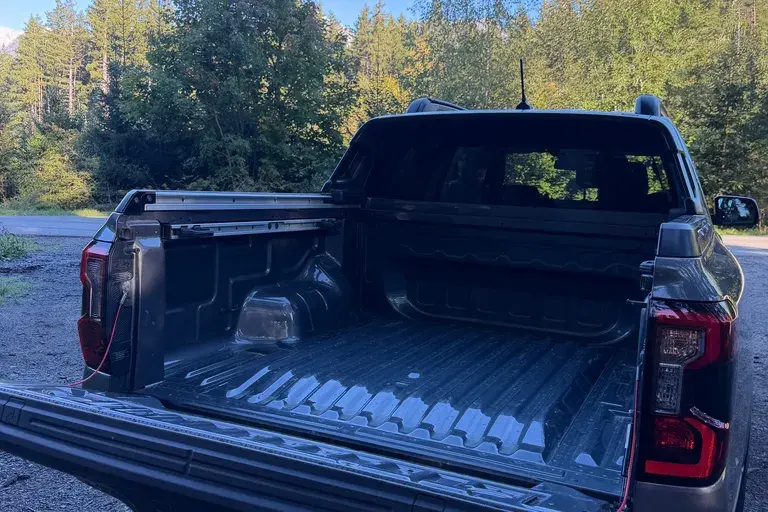
Off-road, the Wildtrak PHEV shows what it was built for. The range of settings is enormous. Transmission, four-wheel-drive system, drive modes and differential lock can all be adapted to the terrain, from road driving through slippery surfaces to sand. Anyone willing to engage with them gets a vehicle that can be tuned very precisely to the situation. The key figures back this up: 800 millimetres of wading depth, around 235 millimetres of ground clearance and up to 3,500 kilograms of braked towing capacity. The load management system on the test car makes the load bed even more practical in everyday use. Anyone looking for a pick-up that combines work, leisure and off-road driving will find a very broad package here.
Efficiency
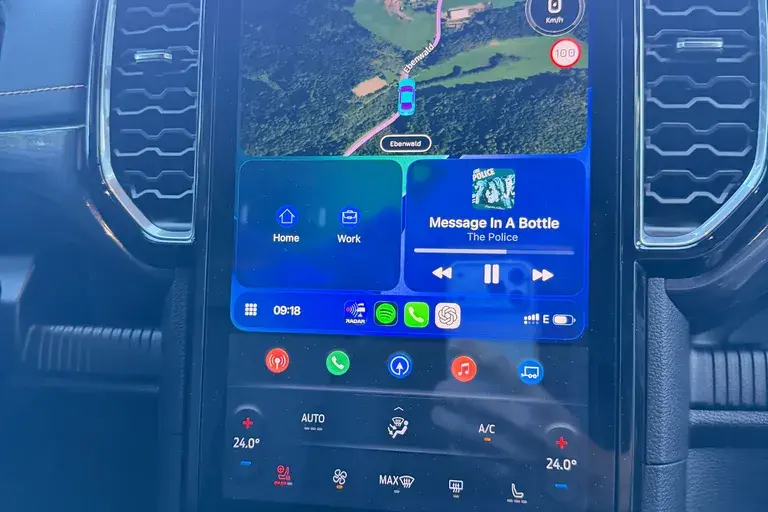
This is where the Ranger pleasantly surprises. With a WLTP consumption of 3.1 litres of petrol per 100 kilometres plus 23.2 kWh of electricity, it sits at an encouragingly low level for a vehicle of this size. The hybrid drivetrain clearly shows up in the consumption figures. The 11.8 kWh (net) battery allows around 42 kilometres of pure electric driving according to WLTP. That is enough for short trips, after which the petrol engine takes over. The EV Now, EV Later and EV Charge modes let you deploy the battery deliberately, for example for the city after a motorway stage. Charging is AC only, taking about four hours on a 16-amp socket. DC fast charging is not possible.
Driver Assistance and Safety
Technology Package 46 complements the standard equipment of the Wildtrak. For a vehicle of this size, driver assistance systems are especially useful in everyday driving, particularly when manoeuvring and in city traffic, where the Ranger's dimensions quickly reach their limits.
Verdict
The Ford Ranger Wildtrak PHEV is a pick-up that makes sensible use of its hybrid drivetrain. Robust build quality with a premium approach, assured power delivery, low fuel consumption and off-road ability with many adjustable settings all speak clearly in its favour. The electric range of 42 kilometres is more of a bonus than a headline argument, and the missing fast-charging connection shows that the hybrid part is meant to support, not dominate. At €76,383 in our test configuration, the Ranger is also not a cheap companion. But anyone looking for a strong, versatile pick-up that is just as convincing off-road and with a trailer as in daily use gets a compelling overall package.
Gallery
More reviews
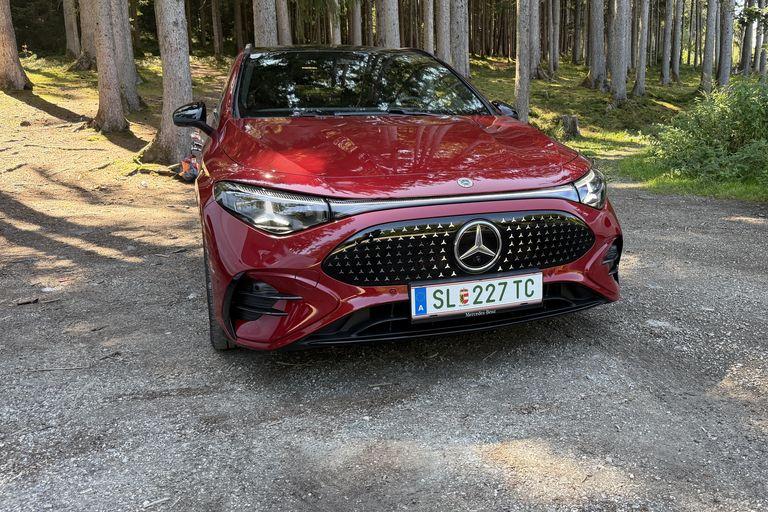
2026 · Mercedes-Benz
CLA 350 4MATIC Shooting Brake
Some cars enter a room — others redefine it. The Mercedes-Benz CLA 350 4MATIC Shooting Brake with EQ Technology belongs firmly in the latter category.
Read the review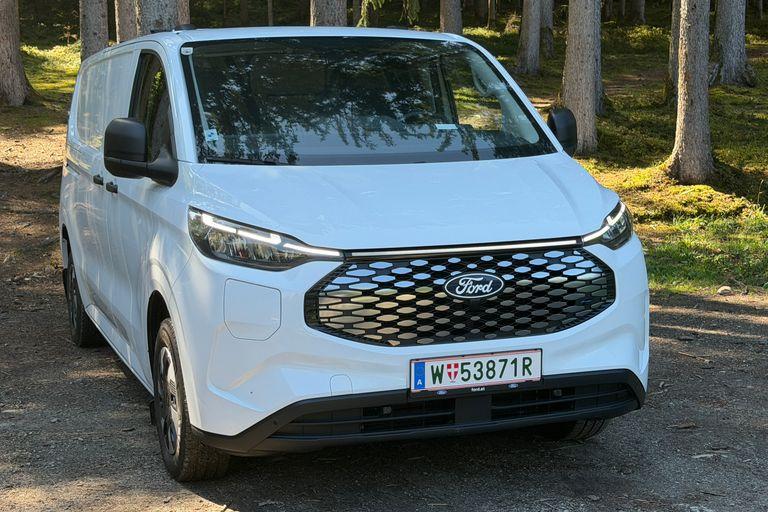
2026 · Ford
E-Transit Custom Trend L2
The Transit Custom has been the backbone of countless European trades and businesses for decades — a vehicle that doesn't win hearts with emotion, but with reliability, capacity and economy.
Read the review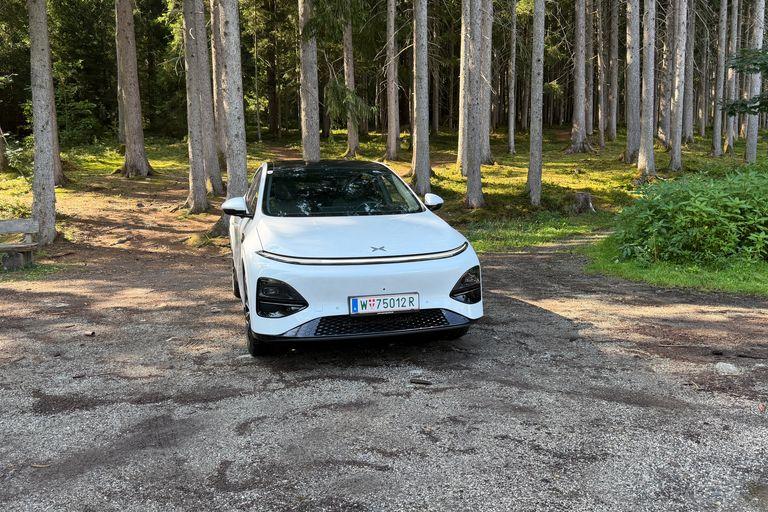
2026 · Xpeng
G6 Long Range
Chinese electric cars have long had a hard time in Europe — the brand too unfamiliar, the scepticism too great.
Read the review